|
1. AF Little
Tern
2. AI Alpine
Swift
3. Azure-winged
Magpie
4. B Blackbird
5. BC Blackcap
6. BH Black-headed
Gull
7. Black
Vulture
8. Black
Wheatear
9. Black-bellied
Sandgrouse
10. Black-eared
Wheatear
11. Black-winged
Kite
12. Blue
Rock Thrush
13. Bonelli's
Eagle
14. Booted
Eagle
15. BT Blue
Tit
16. BX Black
Redstart
17. BZ Common
Buzzard
18. Calandra
Lark
19. CB Corn
Bunting
20. CD Collared
Dove
21. CH Chaffinch
22. CK Cuckoo
23. CO Coot
24. Collared
Pratincole
25. Crag
Martin
26. Crested
Lark
27. CS Common
Sandpiper
28. CW Cetti's
Warbler
29. DW Dartford
Warbler
30. EC Cattle
Egret
31. Egyptian
Vulture
32. ET Little
Egret
33. Fan-tailed
Warbler
34. GG Great
Crested Grebe
35. GL Grey
Wagtail
36. GO Goldfinch
37. GR Greenfinch
38. Griffon
Vulture
39. GS Great
Spotted Woodpecker
40. GT Great
Tit
41. H Heron
42. HM House
Martin
43. HP Hoopoe
44. HS House
Sparrow
45. HY Hobby
46. IT Black-winged
Stilt
47. J Jay
48. JD Jackdaw
49. KB Black
Kite
50. KF Kingfisher
51. KT Red
Kite
52. L Lapwing
53. Lesser
Kestrel
54. LG Little
Grebe
55. LI Linnet
56. Little
Bustard
57. LL Little
Bittern
58. LO Little
Owl
59. LP Little
Ringed Plover
60. LT Long-tailed
Tit
61. MA Mallard
62. ME Melodious
Warbler
63. MG Magpie
64. MH Moorhen
65. MO Montagu's
Harrier
66. MR Marsh
Harrier
67. MZ Bee-eater
68. N Nightingale
69. NB Spoonbill
70. NS Serin
71. OL Golden
Oriole
72. OO Woodchat
Shrike
73. OR White
Stork
74. OS Black
Stork
75. Pallid
Swift
76. Pin-tailed
Sandgrouse
77. Purple
Gallinule
78. Q Quail
79. QW Great
Reed Warbler
80. Red Avadavat
81. Red-necked
Nightjar
82. RK Redshank
83. RL Red-legged
Partridge
84. RN Raven
85. Rock
Bunting
86. Roller
87. RT Redstart
88. RW Reed
Warbler
89. Sardinian
Warbler
90. SC Stonechat
91. Scops
Owl
92. SD Stock
Dove
93. SF Spotted
Flycatcher
94. Short-toed
Eagle
95. SI Swift
96. SL Swallow
97. Southern
Grey Shrike
98. Spanish
Sparrow
99. Spotless
Starling
100. Subalpine
Warbler
101. TD Turtle
Dove
102. TG Gull-billed
Tern
103. TH Short-toed
Treecreeper
104. TN Stone
Curlew
105. TS Tree
Sparrow
106. UK Great
Spotted Cuckoo
107. UR Purple
Heron
108. US Great
Bustard
109. VI Savi's
Warbler
110. VL Short-toed
Lark
111. VR Red-rumped
Swallow
112. WA Water
Rail
113. Waxbill
114. WD Whiskered
Tern
115. White
Wagtail
116. WL Woodlark
117. WP Woodpigeon
118. WR Wren
|
10th May
The tour group met up at Liverpool airport for our afternoon flight to
Madrid, which went almost smoothly, except for a hold-up at the boarding
gate and half and hour delay! Arriving at Madrid we quickly sorted out
our hire vehicles (a Mercedes and an Alfa Romeo- only the best on a GB
tour), before we knew it we were heading SW towards Trujillo, our base
for the week. Passing through  sparsely
populated areas we did see many White Storks, and the occasional
colony of Little Egrets, with the odd Cattle Egret. However
the highlight was a distant Black-winged Kite, observed by a few
lucky folk. As we neared the plains the heaven's opened, and made driving
conditions hazardous. You know what they say about the rain in Spain.
A rest stop produced Crested Lark, as well as Hoopoe in
the improving conditions. (Our bird list was beginning to swell). Arriving
at our luxurious rustic apartments on the outskirts of Trujillo, we quickly
settled in, followed by a superb evening meal, with complimentary, locally
produced wine. Afterwards most of the group heard Scop's Owl as
well as Red-necked Nightjar "cho-choking" not too far
away. The day also produced Black-winged Stilt, lots of Black
Kites, Lesser Kestrel and Spotless Starling, all this
just from the journey down. sparsely
populated areas we did see many White Storks, and the occasional
colony of Little Egrets, with the odd Cattle Egret. However
the highlight was a distant Black-winged Kite, observed by a few
lucky folk. As we neared the plains the heaven's opened, and made driving
conditions hazardous. You know what they say about the rain in Spain.
A rest stop produced Crested Lark, as well as Hoopoe in
the improving conditions. (Our bird list was beginning to swell). Arriving
at our luxurious rustic apartments on the outskirts of Trujillo, we quickly
settled in, followed by a superb evening meal, with complimentary, locally
produced wine. Afterwards most of the group heard Scop's Owl as
well as Red-necked Nightjar "cho-choking" not too far
away. The day also produced Black-winged Stilt, lots of Black
Kites, Lesser Kestrel and Spotless Starling, all this
just from the journey down.
11th May
An early start by all and a pre-breakfast walk around our accommodation
base. The wet grey weather failing to dampen our spirits. First star bird
of the day was Azure-winged Magpie, and not just a few, but at
least 30. Above these were a bubbling group of Bee-eaters, which
delighted all.  In
the grounds of the finca, where we stayed were quite a few White Stork
nests, most of which were huge, with colonies of House and Spanish
Sparrow nesting in the bases. Also around the grounds were several
Hoopoe, a few Nightingale and single Quail. Following
a sumptuous continental breakfast we took the short drive to Trujillo,
visiting several sites around the town, where more White Stork
greeted us. Around the bullring were at least 10 Lesser Kestrel,
which showed well despite the unseasonably damp weather, as well as a
sizeable group of Spotless Starling. Behind the bullring a small
pond produced our first Fan-tailed Warbler, Black-winged Stilt
and Red-rumped Swallow. A Red Kite was also picked out.
The fortified town of Trujillo held more Lesser Kestrels, plus
even more White Stork nests, while parties of Pallid Swift
proved to be an identification challenge. Lunch was taken in a cafe in
the main square (very cosmopolitan!) The weather improved slightly so
we headed to the wooded river valleys further north. The Dehasa countryside
a little different from home. A walk by the Rio Almonte was justly rewarded.
At least 35 Griffon Vultures were counted, with 20+ Black Kites
in the area also. Nesting under the road bridge were several Red-rumped
Swallow, with good numbers of Crag Martin in the air. A few
Woodchat Shrike and Serin were also seen, all good typical
Spanish birds. Kingfisher and Little Ringed Plover were
also noted. Later in the day and a little further north perhaps the star
bird of the area was seen. Flying over a narrow valley a single Spanish
Imperial Eagle was found- this voted by all as bird of the day! This
great little valley also produced Short-toed Eagle, Dartford
Warbler, and a pair of Subalpine Warblers. Returning to our
base triumphant after a great first day we sat down to a good meal, with
copious amounts of wine and a few spirits. Following the round up of the
days birds we retired, knowing we were to hit the plains the the following
day. (The Scop's Owl again calling until the wee small hours!).
69 In
the grounds of the finca, where we stayed were quite a few White Stork
nests, most of which were huge, with colonies of House and Spanish
Sparrow nesting in the bases. Also around the grounds were several
Hoopoe, a few Nightingale and single Quail. Following
a sumptuous continental breakfast we took the short drive to Trujillo,
visiting several sites around the town, where more White Stork
greeted us. Around the bullring were at least 10 Lesser Kestrel,
which showed well despite the unseasonably damp weather, as well as a
sizeable group of Spotless Starling. Behind the bullring a small
pond produced our first Fan-tailed Warbler, Black-winged Stilt
and Red-rumped Swallow. A Red Kite was also picked out.
The fortified town of Trujillo held more Lesser Kestrels, plus
even more White Stork nests, while parties of Pallid Swift
proved to be an identification challenge. Lunch was taken in a cafe in
the main square (very cosmopolitan!) The weather improved slightly so
we headed to the wooded river valleys further north. The Dehasa countryside
a little different from home. A walk by the Rio Almonte was justly rewarded.
At least 35 Griffon Vultures were counted, with 20+ Black Kites
in the area also. Nesting under the road bridge were several Red-rumped
Swallow, with good numbers of Crag Martin in the air. A few
Woodchat Shrike and Serin were also seen, all good typical
Spanish birds. Kingfisher and Little Ringed Plover were
also noted. Later in the day and a little further north perhaps the star
bird of the area was seen. Flying over a narrow valley a single Spanish
Imperial Eagle was found- this voted by all as bird of the day! This
great little valley also produced Short-toed Eagle, Dartford
Warbler, and a pair of Subalpine Warblers. Returning to our
base triumphant after a great first day we sat down to a good meal, with
copious amounts of wine and a few spirits. Following the round up of the
days birds we retired, knowing we were to hit the plains the the following
day. (The Scop's Owl again calling until the wee small hours!).
69 species today with Spanish Imperial Eagle voted Bird of the Day
(BOTD).
species today with Spanish Imperial Eagle voted Bird of the Day
(BOTD).
12th May
The customary pre-breakfast walk around the finca was dropped in favour
of an early morning visit to the plains. The cool grey morning slowly
gave way as the sun attempted to break through. Our first notable birds
were an amazing 60+ Black Kites, which lifted off the posts by
the road, where they had roosted, as we drove by. However our goal this
morning were bustards, and it wasn't long before one Little Bustard
began to call, then another, then a couple were seen, then one a little
closer. We also managed to find, albeit distantly a couple of Great
Bustards, strutting about on the plain. We hope for better views later.
Eventually everyone in the group heard and saw the "Phantom Raspberry
Blower" (Little Bustard). Adding to the dawn chorus of bustards
were a few Quail, while Little Owl and numerous White
Stork were also seen. We made our way back for a well deserved breakfast.
Refreshed we called off in Trujillo for the ingredients for our outdoor
lunch, on the way Hobby and Turtle Dove were seen, following
our shopping spree we moved east again for a day on the plains.
Entering
the plains we scanned the horizon for raptors, which duly obliged Griffon
Vulture as well as our first Black Vultures  of
the tour were observed, with the occasional Booted Eagle drifting
over. Today was basically a day of driving a few hundred yards, stop,
scan and listen. This produced quite a few Skylark, but the target
was Calandra Lark. These big, bulky, larks were easily separable
in flight with their big bills, dark underwing and white trailing wing
edges, everyone soon got to grips with the song. Although the Calandra
Lark were outnumbered by the very common Crested Larks which
fed on the verge. Although declining in the UK, Corn Bunting are
very numerous, with almost every fence post holding a singing male. Further
down the single track road we again stopped and scanned. One keen eyed
member of the group picked up 2 distant Great Spotted Cuckoo, which
some folk managed to get on to- lets hope we get closer views later. Then
amazingly in the distance a small group of Great Bustards were
picked out. Although tantalisingly distant we could get nearer. A drive
down a a rough track was worth it, parking behind a derelict farm gave
us cover as an array of scopes and cameras were quickly erected. A total
of 15 Great Bustards were clearly visible as they gracefully wandered
about in a tight group- this is what we all had come to Spain for. Pulling
off the main road we stopped for our picnic lunch, although binoculars
were kept close to hand, to pick up the occasional Southern Grey Shrike
or Red Kite. During lunch a single Montagu's Harrier was
picked up over a nearby field, this field also produced a brief Short-toed
Lark. At lunch the illustrious leader (me) played the calls of Little
and Great Bustard- both sound extremel of
the tour were observed, with the occasional Booted Eagle drifting
over. Today was basically a day of driving a few hundred yards, stop,
scan and listen. This produced quite a few Skylark, but the target
was Calandra Lark. These big, bulky, larks were easily separable
in flight with their big bills, dark underwing and white trailing wing
edges, everyone soon got to grips with the song. Although the Calandra
Lark were outnumbered by the very common Crested Larks which
fed on the verge. Although declining in the UK, Corn Bunting are
very numerous, with almost every fence post holding a singing male. Further
down the single track road we again stopped and scanned. One keen eyed
member of the group picked up 2 distant Great Spotted Cuckoo, which
some folk managed to get on to- lets hope we get closer views later. Then
amazingly in the distance a small group of Great Bustards were
picked out. Although tantalisingly distant we could get nearer. A drive
down a a rough track was worth it, parking behind a derelict farm gave
us cover as an array of scopes and cameras were quickly erected. A total
of 15 Great Bustards were clearly visible as they gracefully wandered
about in a tight group- this is what we all had come to Spain for. Pulling
off the main road we stopped for our picnic lunch, although binoculars
were kept close to hand, to pick up the occasional Southern Grey Shrike
or Red Kite. During lunch a single Montagu's Harrier was
picked up over a nearby field, this field also produced a brief Short-toed
Lark. At lunch the illustrious leader (me) played the calls of Little
and Great Bustard- both sound extremel y
rude. Like a true professional the ever vigilant leader called out Oystercatcher
as he heard one go over. Now given the fact we were many miles from the
coast it did strike the leader as odd, turning around to follow the call
he looked skywards, only to find that the CD player in his bag was still
playing and Oystercatcher was the next bird after Great Bustard.
You just cannot get the staff anymore! Continuing further down the road
the only trees of note held a thriving colony of Little and Cattle
Egret, with a few White Stork for good measure. Our final detour
took us towards a farm, and an area of water. The air was filled with
the bubbling calls of a quite a few Bee-eaters, the water obviously
attracting many insects. Also in the area was a sizeable colony of Lesser
Kestrel and surprisingly at least 25 Raven. y
rude. Like a true professional the ever vigilant leader called out Oystercatcher
as he heard one go over. Now given the fact we were many miles from the
coast it did strike the leader as odd, turning around to follow the call
he looked skywards, only to find that the CD player in his bag was still
playing and Oystercatcher was the next bird after Great Bustard.
You just cannot get the staff anymore! Continuing further down the road
the only trees of note held a thriving colony of Little and Cattle
Egret, with a few White Stork for good measure. Our final detour
took us towards a farm, and an area of water. The air was filled with
the bubbling calls of a quite a few Bee-eaters, the water obviously
attracting many insects. Also in the area was a sizeable colony of Lesser
Kestrel and surprisingly at least 25 Raven.
Returning
to our finca in reasonable time we wandered around the grounds before
the evening meal. At least 20 Azure-winged Magpies were counted,
with several Nightingales in song, one showing particularly well.
Golden Orioles were also heard from a small woodland. Slightly
away from the finca Redstart and Short-toed Treecreeper
were found, the latter calling loudly, this readily identifiable from
our Treecreeper, wh ile
several Woodlark punctuated the air. Two of our party went off
in search of the local Red-necked Nightjar- despite the very wet
weather and undergrowth the two had stunning views of a perched bird,
after it flew from a wall and landed in the lea of a wall. So unconcerned
was this bird that it fell asleep whilst being being observed. The group
gathered for the evening meal and wine as per usual, with our bird log
following. 67 species today with Little Bustard voted BOTD. ile
several Woodlark punctuated the air. Two of our party went off
in search of the local Red-necked Nightjar- despite the very wet
weather and undergrowth the two had stunning views of a perched bird,
after it flew from a wall and landed in the lea of a wall. So unconcerned
was this bird that it fell asleep whilst being being observed. The group
gathered for the evening meal and wine as per usual, with our bird log
following. 67 species today with Little Bustard voted BOTD.
13th May
Today was a big day and involved a looping drive westwards to the
vast plains of Caceres, returning via a few choice sites. During the night
the insomniacs of the group recorded Red-necked Nightjar and Scop's
Owl again. It must have been early when we set off because yours truly
took a wrong turn, and missed the area where we were supposed to be, never
mind. The weather had taken a significant turn for the better and the
photographers managed some great sunrise shots. All was not lost as lots
of Quail were heard, with the occasional raspberry from a Little
Bustard. Calling off a rocky outcrop on the return we flushed a Great
Spotted Cuckoo, which called raucous ly
as it flew away- this making up the poor distant views the other day.
Again we had a great breakfast and strong black coffee to kick start our
systems. We headed off west again, this time on the right road towards
Caceres. The route would take us through some remote countryside on little
more than tracks, but this did reveal some excellent birding. Almost straight
away we encountered Black-eared Wheatear of the Iberian 'hispanica'
race. By the roadside a teasing Little Bustard called not too far
away, hidden by the tall grass- occasionally raising his head to display.
On a dirt track we were mesmerised by a dozen Montagu's Harriers,
effortlessly quartering the fields, or perched on fence posts, 15 were
counted during the day. Also numerous here were Quail. Although
the star bird for me were the 9 Great Bustard which put on a bit
of a show, strutting their stuff. ly
as it flew away- this making up the poor distant views the other day.
Again we had a great breakfast and strong black coffee to kick start our
systems. We headed off west again, this time on the right road towards
Caceres. The route would take us through some remote countryside on little
more than tracks, but this did reveal some excellent birding. Almost straight
away we encountered Black-eared Wheatear of the Iberian 'hispanica'
race. By the roadside a teasing Little Bustard called not too far
away, hidden by the tall grass- occasionally raising his head to display.
On a dirt track we were mesmerised by a dozen Montagu's Harriers,
effortlessly quartering the fields, or perched on fence posts, 15 were
counted during the day. Also numerous here were Quail. Although
the star bird for me were the 9 Great Bustard which put on a bit
of a show, strutting their stuff.
Moving further
west the wild country produced a plethora of Calandra Lark, and
the outskirts of Caceres produced a small colony of Roller, which
made good use of nesting boxes erected on electric poles. Unfortunately
time was becoming slightly short, so we had to press on to a well known
site for Sandgrouse. Despite a speedy drive we did pick up Black Vulture
and several Booted Eagle. At the site we met a 3 birders who were
watching several Great Bustard. As we watched these we heard the
call of Sandgrouse, and sure enough over the ho rizon
came a mixed party, which landed about 50m away from us, although difficult
to pick up in the vegetation everyone eventually had good views of some
of the 21 Pin-tailed Sandgrouse and 13 Black-bellied Sandgrouse,
with comments like, "Well you see the horizon, well there's two green
patches, come down at 8 O'clock from the second green patch and come straight
down from there and sandgrouse are by the patch of dead grass!" It
did take some time but we all had excellent views of both species, and
were able to compare both together in the same field of view, as well
as hear them call. Reaching our furthest westerly point we had already
picked up over 100 Cattle Egret, c50 Black Kite and 25 Lesser
Kestrel. Back on the main road and beginning our easterly return we
crossed the Rio Almonte. Stopping here we picked up quite a few Alpine
Swift, although our goal was the scarce Black Wheatear. Scanning
the rocks we failed to locate any, although we did find 3 Black Stork.
However just as we were about to leave we picked up a single Black
Wheatear sat on a rock, this disappeared before everyone saw it, then
it reappeared- peering through scopes revealed the bird wasn't disappearing
, but diving into a crack in the rock with food, obviously the bird was
feeding young. At one point we had both adults together. Moving on to
our final destination, we saved the best until last. Parking off road,
and walking down a track brought us to an open area, with green fields
and scattered trees. Here we scanned the area for Black-winged Kite.
Then in the distance two specks on the pylon wires were deciphered as
a pair of Black-winged Kites, which promptly flew off, luckily
towards us. Over the next 15mins were treated to an aerial display of
perhaps the most stunning raptor in Spain. The display included a good
deal of hovering rizon
came a mixed party, which landed about 50m away from us, although difficult
to pick up in the vegetation everyone eventually had good views of some
of the 21 Pin-tailed Sandgrouse and 13 Black-bellied Sandgrouse,
with comments like, "Well you see the horizon, well there's two green
patches, come down at 8 O'clock from the second green patch and come straight
down from there and sandgrouse are by the patch of dead grass!" It
did take some time but we all had excellent views of both species, and
were able to compare both together in the same field of view, as well
as hear them call. Reaching our furthest westerly point we had already
picked up over 100 Cattle Egret, c50 Black Kite and 25 Lesser
Kestrel. Back on the main road and beginning our easterly return we
crossed the Rio Almonte. Stopping here we picked up quite a few Alpine
Swift, although our goal was the scarce Black Wheatear. Scanning
the rocks we failed to locate any, although we did find 3 Black Stork.
However just as we were about to leave we picked up a single Black
Wheatear sat on a rock, this disappeared before everyone saw it, then
it reappeared- peering through scopes revealed the bird wasn't disappearing
, but diving into a crack in the rock with food, obviously the bird was
feeding young. At one point we had both adults together. Moving on to
our final destination, we saved the best until last. Parking off road,
and walking down a track brought us to an open area, with green fields
and scattered trees. Here we scanned the area for Black-winged Kite.
Then in the distance two specks on the pylon wires were deciphered as
a pair of Black-winged Kites, which promptly flew off, luckily
towards us. Over the next 15mins were treated to an aerial display of
perhaps the most stunning raptor in Spain. The display included a good
deal of hovering ,
and culminated in a bird mobbing a Black Kite, which was perched
on a pole, allowing everyone to focus scopes and bins on the Black-winged
Kite, as it continually mobbed the Black Kite. This a fine
end to an excellent day. We returned tired, but elated, and again had
a hearty meal. Our log revealed 74 species today, and debate continued
as to the Bird Of The Day (BOTD). Many wanted the Black-winged Kite,
but because of the numbers involved Montagu's Harrier won out. ,
and culminated in a bird mobbing a Black Kite, which was perched
on a pole, allowing everyone to focus scopes and bins on the Black-winged
Kite, as it continually mobbed the Black Kite. This a fine
end to an excellent day. We returned tired, but elated, and again had
a hearty meal. Our log revealed 74 species today, and debate continued
as to the Bird Of The Day (BOTD). Many wanted the Black-winged Kite,
but because of the numbers involved Montagu's Harrier won out.
14th May
This morning the group split for the pre-breakfast jaunt. Most wandered
around the finca and were rewarded with the usual suspects. However the
four who drove out to Santa Marta de Magasca had a great morning, 4 Black-eared
Wheatear greeted the four, as did the 10 Montagu's Harrier.
Little Bustard were numerous, but were eclipsed by 19 Great
Bustard, which looked superb in the morning sun. Complimenting these
were single Stone Curlew. Frustratingly 18 Black-bellied Sandgrouse
were seen in flight only, although singles were heard most of the morning.
Breakfast allowed both groups to compare notes. Post breakfast birding
today involved an hours drive to the famous Monfrague National Park. We
were to spend the rest of the day here, again stopping, looking and then
moving on, although the day had it's high and lows. Rising through the
foothills we were could see the monastery and the ridge which marks the
boundary of the park. Unfortunately we suffered a setback- the car park
at the monastery was being re-contoured, and was closed. This meant we
couldn't climb to the top and have eye level views of the passing raptors.
Undeterred we parked at bottom and looked up. Pena Flacon was almost as
good as th e
monastery with lots of Alpine Swift, we also had the bulk of our
6 Black Vulture here. From the car park we could look over the
valley and noticed several Blue Rock Thrush, which contributed
to a day total of at least 8, also here were a family party of Black
Redstart. This spot is also well known for Black Stork, and
on cue 4 were observed. e
monastery with lots of Alpine Swift, we also had the bulk of our
6 Black Vulture here. From the car park we could look over the
valley and noticed several Blue Rock Thrush, which contributed
to a day total of at least 8, also here were a family party of Black
Redstart. This spot is also well known for Black Stork, and
on cue 4 were observed.
Further down
the valley we pulled in and had lunch overlooking the reservoir. This
site had previously produced Bonelli's Eagle, needless to say,
bread, cheese, fruit and water went flying as folk grabbed their bins
as a pair circled over us, the black and white markings on the underwing,
and the pale patch on the mantle the give-aways. Lunch was consumed as
98 Griffon Vulture were counted in a single group, which contributed
to a day total of 150 birds. At lunch a Woodchat Shrike obliged,
but frustrated the photographers, 2 Booted Eagle, 2 Egyptian
Vulture were also seen, an adult an immature, the latter seen on the
journey home. High numbers of birds were seen today. Day totals included
60 Black Kite, a total of 200 Crag Martin and 30 Red-rumped
Swallow. Moving further down and round we stopped at an Eagle Owl
site, which appeared not to be nesting this year. However several  Subalpine
Warbler were located, plus Redshank. We scanned the outcrop
where in previous years young Eagle Owl were seen, but not today,
however we returned to Pena Falcon following hot news on an Eagle Owl
site, despite picking up several owl shaped rocks, non were seen, perhaps
if we had stayed or returned later that evening we would have been successful,
but our base was an hour away and we were hungry! Despite the disappointments
of the closed Monastery and lack of Eagle Owls, the group again
returned elated to our base for more food, wine and spirits. Following
our log BOTD was voted unanimously as Bonelli's Eagle, with a handsome
78 species recorded today. Subalpine
Warbler were located, plus Redshank. We scanned the outcrop
where in previous years young Eagle Owl were seen, but not today,
however we returned to Pena Falcon following hot news on an Eagle Owl
site, despite picking up several owl shaped rocks, non were seen, perhaps
if we had stayed or returned later that evening we would have been successful,
but our base was an hour away and we were hungry! Despite the disappointments
of the closed Monastery and lack of Eagle Owls, the group again
returned elated to our base for more food, wine and spirits. Following
our log BOTD was voted unanimously as Bonelli's Eagle, with a handsome
78 species recorded today.
15th May
A quick wander around the finca before breakfast produced about 30
Azure-winged Magpie, plus about 5 Melodious Warblers on
the back tracks, and the usual Woodlark etc... Today we headed
south to the more lush, greener rice growing areas, which provided a nice
contrast in birds and habitat. After breakfast we drove south, picking
up bread, pate, cheese, fruit, buns and water for lunch (I keep you well
fed). Passing the plains we continued south, eventually finding the right
road, to the confusion of our second drivers. Parking off road we came
to our first stop, almost our first birds were 4 Little Ringed Plover,
the croaky call of several Great Reed Warblers alerting us to the
fact we were no longer on the plains. A steady walk around produced a
snake! and a couple of Subalpine Warblers. Today followed the trend
of other days, i.e. stopping at several sites, looking, and then moving
on at our leisure. Disconcertingly a few of the paddies were lacking birds,
however we did notch up Gull-billed Tern, with a day total of 30
birds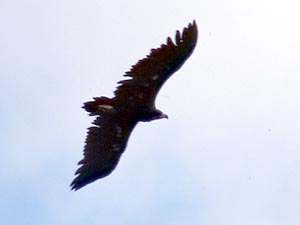 .
Moving slightly further north we picked up 3 Roller by the roadside,
which we later discovered were nesting, as they flew to and forth to a
hole in the side of a wall. Lunch was taken by a canal. More Great
Reed Warblers were heard here, but Golden Orioles were a delight
, with several seen as the fluted away. Generally the day had been slightly
disappointing, but a final stop at a well known site turned up trumps.
Again by a river a male Little Bittern was seen 3 times as it flew
up and down the river. a few of managed to see a small flock of Waxbills,
with a single Red Avadavat recorded. The day ended superbly at
our final destination. Alarmingly quite a few of the paddies had been
converted back to farmland, so there were fewer birds than usual, however
one of our party, who was feeling a little ill and had spent most of the
day asleep, with the occasional foray outside, came into his own, when
from a doze he woke up, looked out and exclaimed "Collared Pratincoles"-
and promptly fell back asleep. We stopped and began to count them- with
13 in total. Looking back the day had actually been quite good, when the
totals were added up, 6 Cettis Warbler, 400 Cattle Egret,
although just 4 Little Egret, 100 Bee-eater, 4 Black-winged
Stilt, 10 Fan-tailed
Warbler,
Red Avadavat, 14 Waxbill and 13 Collared Pratincoles.
The drive back was sedate, as we were tired and knowing that this was
the final full day. Tomorrow would see us return to Madrid,after some
birding of course. 70 Species were seen today, and not surprisingly Collared
Pratincole was voted BOTD, even though they kept us waiting until
the end of the day. Our last meal was memorable, with everyone having
had a great time, needless to say more wine was consumed than usual. After
our meal we decided to .
Moving slightly further north we picked up 3 Roller by the roadside,
which we later discovered were nesting, as they flew to and forth to a
hole in the side of a wall. Lunch was taken by a canal. More Great
Reed Warblers were heard here, but Golden Orioles were a delight
, with several seen as the fluted away. Generally the day had been slightly
disappointing, but a final stop at a well known site turned up trumps.
Again by a river a male Little Bittern was seen 3 times as it flew
up and down the river. a few of managed to see a small flock of Waxbills,
with a single Red Avadavat recorded. The day ended superbly at
our final destination. Alarmingly quite a few of the paddies had been
converted back to farmland, so there were fewer birds than usual, however
one of our party, who was feeling a little ill and had spent most of the
day asleep, with the occasional foray outside, came into his own, when
from a doze he woke up, looked out and exclaimed "Collared Pratincoles"-
and promptly fell back asleep. We stopped and began to count them- with
13 in total. Looking back the day had actually been quite good, when the
totals were added up, 6 Cettis Warbler, 400 Cattle Egret,
although just 4 Little Egret, 100 Bee-eater, 4 Black-winged
Stilt, 10 Fan-tailed
Warbler,
Red Avadavat, 14 Waxbill and 13 Collared Pratincoles.
The drive back was sedate, as we were tired and knowing that this was
the final full day. Tomorrow would see us return to Madrid,after some
birding of course. 70 Species were seen today, and not surprisingly Collared
Pratincole was voted BOTD, even though they kept us waiting until
the end of the day. Our last meal was memorable, with everyone having
had a great time, needless to say more wine was consumed than usual. After
our meal we decided to  converge
on the terrace. This we did, with more wine in hand, although our senses
were not completely dulled as 3 different Scop's Owl were located,
plus the local Red-necked Nightjar. converge
on the terrace. This we did, with more wine in hand, although our senses
were not completely dulled as 3 different Scop's Owl were located,
plus the local Red-necked Nightjar.
16th May
Our final pre-breakfast walk around the finca produced the usual suspects,
some of them almost like our regular garden birds back home, having seen
them almost every morning. Our regular Hoopoe, Nightingale,
Bee-eater, Golden Oriole, Quail and Spanish Sparrow
became familiar to us. Following our final breakfast we packed up, said
our goodbyes and journeyed north, although this was broken by a visit
to a series of ponds just off the motorway about an hour north of Trujillo.
Either side of the road were 2 large ponds, which immediately revealed
2 Little Tern, slightly later a couple of Whiskered Tern
flew by. At the same time at least 2 Savi's Warbler were reeling
away, all of which boosted our list somewhat. On the waters edge a Common
Sandpiper proved elusive although more obvious were the Grea t
Crested Grebe in the middle of the pond. Over a distant reedbed several
Marsh Harriers quartered, although a distant Spoonbill dropped
out of the sky and into the reeds, never to be seen again. The smaller
body of water was shallow and well vegetated, ideal habitat for our main
target bird, Purple Gallinule. After a while one was located, then
another, to the delight of all. The other 'purple' birds were 4 Purple
Heron wading and flying over the main body of water. Conscious of
time we headed north again and back to Madrid. Our journey back was decidedly
drier than our journey down. Having to circumnavigate Madrid we were a
little pushed for time. Having driven right around Madrid, we then drove
right around the airport, but eventually found our spot, and dropped off
our hire vehicles. Some of the party were staying on in Madrid for a couple
of days, so we quickly said our goodbyes and hurried to check in, and
the return flight back to Liverpool airport. t
Crested Grebe in the middle of the pond. Over a distant reedbed several
Marsh Harriers quartered, although a distant Spoonbill dropped
out of the sky and into the reeds, never to be seen again. The smaller
body of water was shallow and well vegetated, ideal habitat for our main
target bird, Purple Gallinule. After a while one was located, then
another, to the delight of all. The other 'purple' birds were 4 Purple
Heron wading and flying over the main body of water. Conscious of
time we headed north again and back to Madrid. Our journey back was decidedly
drier than our journey down. Having to circumnavigate Madrid we were a
little pushed for time. Having driven right around Madrid, we then drove
right around the airport, but eventually found our spot, and dropped off
our hire vehicles. Some of the party were staying on in Madrid for a couple
of days, so we quickly said our goodbyes and hurried to check in, and
the return flight back to Liverpool airport.
A great bunch
of people on another great tour, with some cracking birds. See you there
in 2005?
 
Bookings are now being taken for our next Extremadura tourclick
here
|

 Tours
Tours 